Tuesday, January 22, 2008

Ode to a Large Tuna in the Market


Among the market greens,
a bullet
from the ocean
depths,
a swimming
projectile,
I saw you,
dead.

All around you
were lettuces,
sea foam
of the earth,
carrots,
grapes,
but
of the ocean
truth,
of the unknown,
of the
unfathomable
shadow, the
depths
of the sea,
the abyss,
only you had survived,
a pitch-black, varnished
witness
to deepest night.

Only you, well-aimed
dark bullet
from the abyss,
mangled
at one tip,
but constantly
reborn,
at anchor in the current,
winged fins
windmilling
in the swift
flight
of
the
marine
shadow,
a mourning arrow,
dart of the sea,
olive, oily fish.
I saw you dead,
a deceased king
of my own ocean,
green
assault, silver
submarine fir,
seed
of seaquakes,
now
only dead remains,
yet
in all the market
yours
was the only
purposeful form
amid
the bewildering rout
of nature;
amid the fragile greens
you were
a solitary ship,
armed
among the vegetables
fin and prow black and oiled,
as if you were still
the vessel of the wind,
the one and only
pure
ocean
machine:
unflawed, navigating
the waters of death.

~Pablo Neruda

Monday, January 21, 2008

Okie Dokie Artichokie


Ode to the Artichoke by Pablo Neruda

The artichoke
of delicate heart
erect
in its battle-dress, builds
its minimal cupola;
keeps
stark
in its scallop of
scales.
Around it,
demoniac vegetables
bristle their thicknesses,
devise
tendrils and belfries,
the bulb's agitations;
while under the subsoil
the carrot
sleeps sound in its
rusty mustaches.
Runner and filaments
bleach in the vineyards,
whereon rise the vines.
The sedulous cabbage
arranges its petticoats;
oregano
sweetens a world;
and the artichoke
dulcetly there in a gardenplot,
armed for a skirmish,
goes proud
in its pomegranate
burnishes.
Till, on a day,
each by the other,
the artichoke moves
to its dream
of a market place
in the big willow
hoppers:
a battle formation.
Most warlike
of defilades-
with men
in the market stalls,
white shirts
in the soup-greens,
artichoke field marshals,
close-order conclaves,
commands, detonations,
and voices,
a crashing of crate staves.

And
Maria
come
down
with her hamper
to
make trial
of an artichoke:
she reflects, she examines,
she candles them up to the light like an egg,
never flinching;
she bargains,
she tumbles her prize
in a market bag
among shoes and a
cabbage head,
a bottle
of vinegar; is back
in her kitchen.
The artichoke drowns in a pot.

So you have it:
a vegetable, armed,
a profession
(call it an artichoke)
whose end
is millennial.
We taste of that
sweetness,
dismembering scale after scale.
We eat of a halcyon paste:
it is green at the artichoke heart.

Beneath the Crunchy Exoskeleton Lies the Heart of a Struggling Man: the True Story of a Man Battling his Id

Sigmund Freud the great Viennese psychologist changed modern psychology and thought with his theory of the id, ego, and super ego. First, a quick lesson:

1) Id: inner desire- the id is responsible for basic desires, infantile emotions, amoral and egocentric urges, and it is in constant struggle with the super-ego. The Id is divided into two portions: life and death. The life instincts are essential for a pleasurable life. While the death instincts are our unconscious desire to die, as to relieve us of earthly struggles. The id is expressed through art, anger, fiction, media, and mind-toying substances like alcohol and drugs.

2) ego: the I-the ego’s task is to mediate between the id and the super-ego. It forms a set of morals, a reality, and drives that satisfy the id and super ego. It must balance inner desires and the external world.

3) super-ego: the conscience- the super ego is the internalization of the father-figure and the regulations of society. It is in conflict with the often amoral, unrealistic desires of the id. The super ego maintains our sense of morality and makes sure that our behaviors is in-line with society.

In Franz Kafka’s novella Metamorphosis, the clear struggle between Gregor Samsa’s id, ego, and superego are displayed through the dream-like experience. Freud’s approach to understanding the three layers of the mind was through dream-analysis. Kafka, sets the stage for Freudian examination through his fantastical transformation of Gregor into an insect. Through this metamorphosis the inner layers of Gregor’s mind and the Samsa’s family dynamics are exposed.

Oedipal Complex?
The struggle for authority between Gregor and his father may be an extension of the Oedipal Complex that Freud believed in. Gregor’s father is in great debt and is out of work. Gregor is the bread winner and is forced to work in order to support his family. However with the transformation and deterioration of Gregor, his father reassumes his position as the authority head of the Samsa family. Father Samsa represents the super-ego, the father figure and the regulations of society. Just as Gregor’s office manager, the father embodies the pressure of society on an individual to make money, work, and survive for the sake of others. Gregor slaved away for years like a drone ant in order to help the ‘colony’ of his family. However, he was betrayed by his family (most importantly his father) when he overheard that a portion of Gregor’s earnings were not being used to pay off debt but were being saved for a rainy day! Gregor was filled with shame and grief after hearing this.

The fact that Gregor has a voice and conscience but cannot express himself in understandable terms, is a direct reflection of his id’s inner struggle. His voice is a murmured insect tongue; but his thoughts are clear. Gregor’s id is in constant struggle with his father and his super ego. Gregor must keep supplying the family with money at the expense of his happiness.
When reading this novella I felt strong feelings of compassion and admiration for Gregor. Despite the disgust, disrespect, and harm he received from his family members, Gregor was still considerate towards them. He spent hours trying to cover himself with a sheet in order to sheild his family from the site of him. Although he acted this way out of consideration, he ultimately saw himself in the same light that his parents and sister did. Especially after hearing his sister’s desire to get rid of Gregor, his self-image drastically deteriorated. Kafka said, ''The rotting apple in his back and the inflamed area around it, all covered with soft dust, already hardly troubled him. He thought of his family with tenderness and love. The decision that he must disappear was one that he held to even more strongly than his sister, if that were possible.” Soon, Gregor died. But throughout his struggle, pain, and alienation, Gregor remained loving and understanding of his family.

Finally, Gregor's id's balance between life and death instincts falters. Gregor sees death as his escape from his worldly situation. His unacknowledged desire to die, consumes him in his state of grief and shame. While his family continues living at the expense of their loyal son, brother, and worker.

Interesting observation: There are many aspects of this novella that are coupled in groups of three
There are three:
- family members of Gregor
- layers of the mind: id, ego, super-ego
- metamorphosis typically has three stages (caterpillar)
- story is in three parts
- the three Samsas write three letters
- doors to Gregor’s room
- lodgers

I apologize for the disjointedness of this blog entry. I really loved the story; however, writing about it was hard for me because there was so much to think about. I had trouble organizing my thoughts this time. I’ll make sure the next one is more logical and coherent.
(836)

Saturday, January 19, 2008

We All Have an Inner Insect

First of all, I would like to say that everyone’s preconceived notions of insects should be reexamined. They are not something to be squished, shooed, or screamed at. These creatures are invaluable to the environment. They’re also ancient and wonderfully adapted! Take the praying mantis, which dates back to the time of the cockroach and dinosaurs, comes in 2,300 varieties, camouflages as a stick, leaf, or even a flower, and is a miniature assassin. Or the humble ant, who colonizes every place on our planet (except for the poles) and is the only creature to domesticate animals other than humans! Insects can be gross, annoying, scary, or invasive. But then again, so can people. Simply because there are few bad apples with worms in them, does not mean that every insect is horrible, grotesque, or otherwise not worthy of living. Let’s give everyone a chance.


... to be continued

Orchid Mantis


Leaf Mantis:

Sunday, January 13, 2008

The Death of Ivan Ilyich

Today we spoke about what makes great literature. I believe that an everlasting piece of writing must capture some aspect of human nature. Although I did not enjoy reading this novella, I appreciate Tolstoy’s language and message. What Tolstoy captured in The Death of Ivan Ilyich is the constant struggle of the individual vs. society.

As civilization has advanced, the importance of individualism has risen at the expense of kinship. The industrialized world’s emphasis on individual glory forces many to replace compassion, sympathy, and community with self-interest and ruthless individualism. I am not preaching that there is anything wrong with that, but I believe we have not yet found the golden mean. Traditional societies value kinship above the individual and this attitude fosters a group-effort. However, these societies focus on survival. Our society, well beyond a struggle for survival, searches for monetary and material indulgences. In times of strife, communities come together to support one another and provide for each other. However for the most part, the individual is left to fend for herself. The abrasiveness of society erodes many natural inclinations a person may have towards community and kinship. I believe Tolstoy spoke of this deteriorating effect of society on the person.

Ivan Iliych was a product of society. His major decisions in life were done in order to fit society’s standards. His goal was to improve his social standing. However his energy, time, and effort put into this quest were at best quixotic. The decor of his home, which was intended to look high-class, ended up looking like the homes of those who want to appear high-class but indeed are not. Also, his marriage was a result of how socially “right” their pairing was. This resulted in an unhappy, uncaring, and unloving marriage. He spent his years partying with the elite in order to boost himself in society; however what he gained was a false image of his social standing and false, “so-called” friends to boot.

Just as many monks, devotees, and religiously-inclined individuals do, Iliych found himself through isolation. Because of his illness, he was shut away from society and forced to confront himself—something he had avoided by covering himself with a façade. In this time Ivan learns the importance of the spiritual, inner self as opposed to the physical, materialistic self. His isolation from society allowed him to question his lifestyle and his beliefs. This scene in the novella was a crucial turning point. Socrates said, “The unexamined life is not worth living.” Unfortunately for most his life, Ivan did not examine his life. And when he finally realized his wrong-doings and misdirection, it was far too late. Ivan conquered his fear of death and even experienced joy. Taking of the mask society concealed him with, Ivan is relieved of a heavy weight upon his shoulders, and dies a peaceful soul.

Lastly, to contrast with the upper echelon of Russian society, Tolstoy uses the character of Gerasim as a foil. Gerasim is everything society does not offer Ivan. Gerasim, a humble peasant boy, represents compassion, kinship, love, understanding, and acknowledgement. He is the only one who faces the prospect of death as an inevitability and not as something taboo. He is a breath of fresh air in a society that is consumed by falseness and self-interest. Finally, a character who has compassion and empathy relieves Ivan of his daily suffering and helps Iliych understand how happiness and love should consume one’s life not material pleasures.

Count Tolstoy grew up in the upper class of Russian society but spend his last days devoted to Early Christian theology and a simpler way of life. Ivan makes this realization too late in his life; however, he redeems himself through this epiphany.

Friday, January 11, 2008

Seeds of Change-Common App Essay


An Indian proverb states, “All of the flowers of all the tomorrows are in the seeds of today.” I keep this mantra in my mind when I am toiling in the soil of my garden. For two years now, every Friday I can be found with dusty pants, muddy shoes, and a shovel in hand. After earning a green thumb from a desert landscaping course, I have been working incessantly with a team of three to create a desert, xeriscape garden that is both educational and aesthetically pleasing. We have transformed the barren, dilapidated landscape of our school’s science garden into a lively, thriving Eden. Through the course of this project, my understanding of the natural world and of myself has been influenced by plants and by the creation of our garden.

Gardening has made me more aware of the world in which I live. I see that plants are incredible life forms: their ingenious design and aesthetic quality make them a wonder of nature. They are the keystone for life on earth—cooperating with all species, fertilizing the land, and supplying our planet with the breath of life. One morning, after a session of planting, I witnessed a violet hummingbird sipping the sweet nectar of a new plant. The hummingbird’s interaction with the garden was a visible sign that all organisms are interconnected. I saw then that my actions—mankind’s actions—affect the ecosystem and ultimately the biosphere. Encounters like this have given me a deeper respect for the delicate balance of life. To change the world, all one needs to do is plant a seed with the hope of growth.

What’s more, the garden is the perfect fusion for my passions of biology and art. It is both an educational area and a beautiful accent to our campus. My scientific side loves the method behind creating an efficient, healthy garden; while my artistic side sees gardening as an art that uses flowers and plants as paint, and the soil and sky as canvas. The painting of our garden changes every day. There is always a new leaf to be found, a new cactus to add, and a new problem to solve. It is a constantly evolving process; in essence, the garden is always growing. I have learned that a garden requires lots of water—most of it in the form of perspiration. Hours of physical labor have gone into this creation. But after a hard day of planting, I can pat my hands dry of the dirt and leaves, and feel proud that I am creating something that will last longer than I will.

As the garden has grown, so have I. Our group initially had failures, but we have learned from our mistakes and persevered. Vita Sackville-West, English poet, novelist, and fellow gardener said, “The most noteworthy thing about gardeners is that they are always optimistic, always enterprising, and never satisfied.” My patience, diligence, and hope have been tested by the garden. But upon the sight of a vibrant, new leaf all doubt is lost. I realize that I am planting the seeds for a better garden of the future—a metaphor I extend to all aspects of my life.

Through this experience I have learned to cultivate the garden within. I am more understanding of life’s intricacies and I am more confident in my ability to change the world, even if it is one seed at a time. The perfume of a flower coupled with the fresh scent of the wet earth is an indescribable feeling that I live for. It is said that many things grow in the garden that were never sowed there by human hands. Weeds and insects top that list; however, seeds of thought and awareness engendered in the garden can spread like dandelion seeds in a gust of wind. The garden is a symbol of cooperation between man, animals, and plants. For me, gardening is a labor of love whose real fruits are not tangible.

Thursday, January 3, 2008

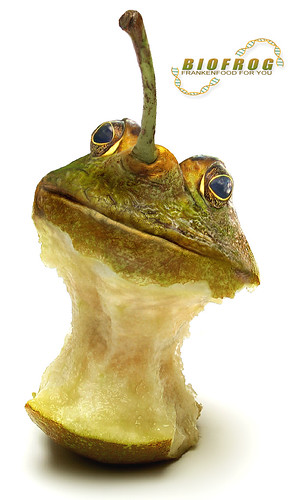
Frankenfood to Save Thousands in Africa

Here is my optional essay for Tufts:

Prompt:
The human narrative is replete with memorable characters like America’s Johnny Appleseed, ancient Greece’s Perseus or the Fox Spirits of East Asia. Imagine one of humanity’s storied figures is alive and working in the world today. Why does Eric the Red have a desk job? Would Shiva be a general or a diplomat? Is Quetzalcoatl trapped in a zoo? In short, connect your chosen figure to the contemporary world and imagine the life he/she/it might lead.

Frankenfood to Save Thousands in Africa
Mon Oct 5, 10:23 PM ET
Harare, Zimbabwe - World renowned researcher Dr. Victor Frankenstein has finally unveiled his latest creation: a consortium of genetically modified foods that will end malnutrition. The world’s leading GM food developer DNA (Designing New Agriculture) has completed its ten-year mission to create “Frankenfood” which, when eaten in three servings, will provide a full day’s worth of nutrition. The seeds of these organisms will grow with minimal water usage and produce bountiful crop yields, resulting in cheaper production and more food for impoverished nations.

Just fifteen years ago Dr. Frankenstein was shunned by the scientific community and by religious activists after his failed attempt to “play God”. However, today he is esteemed as a savior. He is also the number one genetic engineer. Using his esoteric knowledge, understanding of life and genomics, and a spark of creativity he has changed the world--an achievement that was never expected after Project Adam’s disastrous end. Dr. Frankenstein is a true success story. Using his passion for positive ends, he will save millions in the future.

Previously, Dr. Frankenstein was on an ethically-debatable search for what he called “the elixir of life”. In Project Adam he attempted to create life from inanimate matter. He succeeded. The result was a human prototype, which Frankenstein abandoned. The creature roamed without a parent, without a home, and without food, going to extremes to find these three things. It stole food, broke into houses, and frightened families--all because it wanted a shelter, nutrition, and love. Frankenstein’s creation once said to him, “I am malicious because I am miserable. ... If any being felt emotions of benevolence towards me, I should return them a hundred and a hundred fold.” After observing the creature, Frankenstein realized what he had to do. He said, “I shall live to improve myself, to take care of my child and to render myself worthy to join him.” While Frankenstein could not find parents or homes for every abandoned child, he could feed them.

This was the turning point in Victor Frankenstein’s life. The doctor said, “Nothing contributes so much to tranquilize the mind as a steady purpose--a point on which the soul may fix its intellectual eye.” Nourishing children with wholesome food was his new goal. In the memory of his creature, he founded DNA and started making history.